


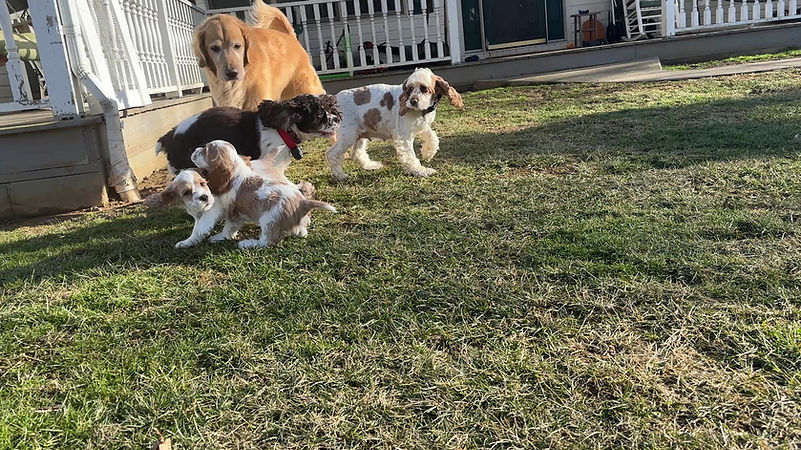

Meet COVER BOY BUTCH the famous Cocker Spaniel!
- Jennifer P Clark
- May 18, 2021
- 8 min read
Updated: Feb 23, 2022
I was super excited to find this little guy when I began looking for famous Cocker Spaniels. Not only did I find numerous posters with this spunky little Cocker, I learned that Albert Staehle's illustrations created many other icons that we still know today.
-acknowledgements: I will be referencing several sites from which I gathered the information for this blog. I will be including links and the url address for each to acknowledge the sources and just in case you would like to explore them further.
Albert Staehle - illustrator 1899-1975
Illustrators were an important group of people to advertisers in the early 1900s. Even though photography had been commercially available since 1839, it was an expensive process. That's why newspapers, magazines, billboards, and posters were most often produced using illustrations instead of photographs even into the 1930s and 1940s. You probably recognize a couple of the more famous illustrators - Norman Rockwell and Beatrix Potter.
Well, back in the day, Albert Staehle was every bit as popular as those two.

The focus of Staehle's career shifted drastically when the Saturday Evening Post asked him to illustrate a dog cover for the magazine. His first Post cover was published with the February 19, 1944 issue and showed a Black and White Parti Cocker Spaniel named "Butch" chewing up a book of wartime rationing stamps. The magazines sold out quickly and mail poured in to defend the 'innocently' mischievous puppy; some people even sent more rationing stamps to replace the ones that Butch had supposedly destroyed. His popularity seemed instantaneous and soon he was a household name. Butch the Cocker Spaniel had become quite famous. I am certain that he was a big impetus for the popularity of Cocker Spaniels being a favorite family pet.


Staehle used different Cocker puppy models for his first few Post covers, but he quickly recognized Butch's growing popularity. Four months after Butch was introduced to the public, Albert purchased his very own puppy born in June of 1944. Albert registered his puppy with the American Kennel Club as "Cover Boy Butch." Butch and Albert began a partnership that would have a nearly 20 year run. Butch Junior was born in November 1950. He joined Staehle's 'pack' of doggy models and when he became old enough, "posed" for his own portraits.

Even though Butch was by far Staehle's most notable character, Albert was also famous for many other well known icons of American advertising. Reading up on Albert Staehle, I learned quite a bit about the back stories behind them. For instance, I did not realize that Smokey Bear was the product of WWII, did you?
👇🏼1st Smokey Bear -1945👇🏼

I found this jewel of information at https://www.history.com/news/smokey-bear-wwii-origins
"WWII was a tricky time for forest fire fighting. In the face of wartime rationing, it became harder and harder to get a hold of modern firefighting equipment. As more and more male firefighters joined the war efforts, officials faced a dilemma. 'Foresters feared that the forest fire problem might soon get out of hand unless the American public could be awakened to its danger,' said forestry researcher,
J. Morgan Smith.
The shelling sparked a national invasion panic, with speculation as to just what Axis fighters could be capable of on U.S. soil. The specter of devastating fires loomed large. Not only were local men assisting with the war effort instead of watching for fires, but firefighting had long been considered just a local concern.
Though federal funds had been going toward forest fire fighting since the early 20th century, there was no national effort to fight forest fires. State forestry services and the Forest Service joined the newly created War Advertising Council to create the Cooperative Forest Fire Prevention Program in 1942.
The program focused on public service advertising, and posters urging the public to aid the war effort by preventing forest fires were soon splashed across the country. In 1944, the program enlisted a famous poster child, Disney’s Bambi. But Disney only lent the character to the effort for one year.
Smokey Bear was born on Aug. 9, 1944, when the U.S. Forest Service and the Ad Council agreed that a fictional bear would be the symbol for their joint effort to promote forest fire prevention.
Artist Albert Staehle was asked to paint the first poster of Smokey Bear. It depicted a bear pouring a bucket of water on a campfire and saying “Care will prevent 9 out of 10 fires.” Smokey Bear soon became very popular as his image appeared on a variety of forest fire prevention materials. In 1947, his slogan became the familiar “Only YOU Can Prevent Forest Fires!”
Staehle created the first three posters of this national icon. I thought I would share them with you in this blog:
👇🏼1947👇🏼

👇🏼1946👇🏼

Ironically, the only real enemy attempts to burn U.S. forests were failures. More than 9,000 Japanese fire balloons were launched over the western United States between 1944 and 1945, but the weapons caused few casualties and even less fire damage.
Over the next 75 years, Smokey's message of forest fire prevention successfully raised awareness of the dangers of unattended fires—but is also thought to have turned public opinion against burns of any kind. Ironically, the bear helped put the brakes on controlled burns, which normally kept the amount of flammable brush under control and helped encourage new growth in forests. It's likely that this is the cause of the massive wildfires that seem to be a yearly problem along the west coast today.
In 1950, a real-life bear cub saved during a forest fire in New Mexico was adopted by the Forest Service, given Smokey’s name, and brought to the National Zoo. During his 26-year tenure at the zoo, Smokey Bear became a national icon—and the words “Only YOU Can Prevent Forest Fires” a nationally known catchphrase.

******************************************************************
The following is a tribute that Marjory Staehle wrote for her husband after his passing at the age of 74.
American Legion Magazine, January, 1977
He Gave Us Smokey the Bear
By Marjory Houston Staehle
Albert Staehle was my husband. His name may not mean much to the average person, but any schoolchild knows his "Smokey the Bear."
For over 50 years Al Staehle, Smokey's creator, painted illustrations that have become part of Americana and have found a place in the hearts of animal lovers everywhere. This is my tribute to him.
Al came from a long line of artists. His father, an American illustrator who painted for Currier and Ives was' studying art in Munich, Germany when he met and married the daughter of the Court Painter to the Royal House of Bavaria. Albert was born in Germany to American citizenship in 1899.
"I started to draw as soon as I could hold a pencil," he said.
Success came early. In 1918, he entered a poster competition. His picture of a cow feeding her calf a bottle of milk and saying, "Nothing's Too Good For My Baby" won the first prize by public vote (not the advertising hierarchy). The Borden Company was working on an idea so similar that they bought Al's picture to protect patent rights. The idea evolved into Elsie the Cow.
After that, he had all the work he could handle; the swan for the soap of the same name, rabbits, birds, tigers, monkeys, a gorilla, bears and numerous cats, kittens, dogs and puppies. All peered out from national advertisements on posters, billboards and magazines all over the United States. Quite a few appeared on American Legion Magazine covers.
But "Butch" was his favorite. The love affair began in a pet shop window. Saturday Evening Post editors were looking for a cover subject to boost newsstand sales and decided a puppy would be a good subject. Al was asked to come up with some sketches. A passing glance into a Greenwich Village pet shop window met the pleading eyes of a six week old Cocker Spaniel.
Butch and Al Staehle did their job well. Whenever a "Butch" cover appeared, it was number one in news stand sales. Fan mail came from everywhere. Most of it was addressed to the mischievous pup. Sometimes letters were sent to the artist asking him not lo be too hard on the dog for the many pranks he played. Once, when a cover depicted Butch running through the house unraveling a roll of tissue, a case of toilet tissue arrived from a fan with a note to please let Butch enjoy himself. Another cover, during World War II, showed the dog chewing a book of ration stamps. This brought a number of coupons in the mail.
The U.S. Department of Interior wanted a mascot for its forest fire prevention campaign and Al was asked to collaborate. The Rangers suggested a woodchuck or a raccoon.
"The raccoon looks too much like a burglar," Al protested. So they settled on a bear.
"I felt a bear could be portrayed as the father of the forest." Al explained.
The bear was fitted with a ranger's hat and badge, blue jeans and a pail of water to put out fires. He was named after Smokey Joe Ryan, a famous New York Fire Chief. Smokey was part of the war effort and Al received only "expenses" for his posters. (The original brown bear who symbolized "Smokey" recently died.) The monies which continue to come from various Smokey enterprises go to forest education.
Al never forgot it was the popular vote that launched his career and he always wanted to paint for everyone. When he died in 1974, we planned a memorial show of his work, but instead of using a fine art gallery or "select" museum, we chose Miami Dade Community College and Dade County Museum of Science and Planetarium. Both are frequented daily by busloads of visitors, tourists and lots of children. Al would have liked it.
-Marjory Houston Staehle
******************************************************************
In 1918, Albert entered a poster competition. His picture of a cow feeding her calf a bottle of milk and saying, "Nothing's Too Good For My Baby" won the first prize by public vote.

The Borden Company was working on an idea at
that time that was so similar, they bought Staehle's picture so that they would own exclusive rights to it when their new campaign was launched. Eventually, the Cartoon Elsie was created in 1936 by the company's design team. Elsie was born out of a crisis for the company. Borden Dairy, a powerful milk and cheese processor, found itself in a pricing war with northeastern dairy farmers. The company needed to keep the public on its side. Its answer to this dilemma was found in a bright-eyed, humanized cartoon cow named Elsie. She appeared in many advertisements and captivated the public with her signature daisy necklace, jaunty horns and coquettish smile. Elsie symbolized the “perfect dairy product”. Her image became one of the most recognizable product logos in the United States and Canada.
Elsie was so popular that the design team developed a family for her as well, with Elmer the Bull and two calves named Beulah and Beauregard. The Elsie comic cartoons continued to appear in commercials and national magazines with the cow family behaving like humans. In 1948, The couple then had twins named Larabee and LoBelia.

Elsie helped Borden survive the “milk wars” of the 1930s during the Great Depression. She also became a potent symbol for the dairy industry and her Jersey breed of small, creamy coffee-colored cows. Elsie’s fans adored her enough to seek a real-life Elsie to tour the country. Eventually, there was a real living Elsie as a registered Jersey heifer during the 1939 World’s Fair held in New York City.
Elsie was so popular with the public that she traveled all over the United States in her custom 18-wheeler nicknamed “Cowdillac”.
Elsie’s popularity made her the spokesperson for various causes like selling World War II War Bonds. She helped sell $10 million of them. Elsie received a thank you from the Secretary of the Treasury. She also earned college degrees such as Doctor of Bovinity, Doctor of Human Kindness, and Doctor of Ecownomics. People recognized Elsie more than the president of the United States!

Elmer the Bull was given his own advertising campaign too... selling GLUE!!! Who knew!?!? Borden Dairy and Glue... before doing this research into the life of Albert Staehle, I had no idea the two were connected! It's a small world!!
I hope you have enjoyed this blog as much as I have. I find it fascinating how history has influenced so many things we take for granted. WWII, as devastating as it was, opened new doors for a more modern society.
Here is a link with some interesting history about Elsie and Elmer.
******************************************************************
Here are some of my favorite Butch illustrations Staehle did for the covers of the Saturday Evening Post, The Star Weekly and the American Weekly.


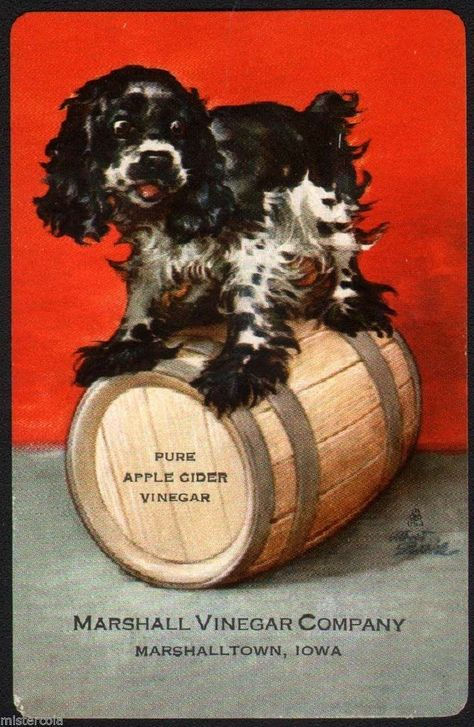


AND OF COURSE I WAS THRILLED TO FIND ONE WHO LOOKS LIKE MY ANNIE!!


Comments